What is Mobile Application Security?
A Complete Guide for 2026 Mobile applications have become the primary gateway between users and digital services. From banking and healthcare to social networking and enterprise productivity, mobile apps handle an enormous volume of sensitive data every second. But with this convenience comes a significant challenge: mobile application security.
If you’re a developer, security engineer, or business leader, understanding mobile application security is no longer optional. It’s foundational. In this guide, we’ll break down what mobile application security means, why it matters, the common threats you need to defend against, and the best practices to build resilient apps.
Defining Mobile Application Security
Mobile application security refers to the practices, tools, and methodologies used to protect mobile apps from threats such as data breaches, unauthorized access, reverse engineering, malware, and fraudulent activity. It encompasses every stage of the app lifecycle, from design and development to deployment, runtime, and decommissioning.
Unlike traditional web application security, mobile security must account for a uniquely complex threat landscape. Apps run on devices that users fully control, connect through untrusted networks, store data locally on hardware that can be lost or stolen, and interact with a sprawling ecosystem of third-party SDKs and APIs. Each of these factors introduces attack surfaces that simply don’t exist in server-side applications.
Why Mobile Application Security Matters
The stakes have never been higher. With billions of smartphone users globally and mobile commerce growing exponentially, attackers have shifted significant resources toward exploiting mobile platforms.
A single vulnerability can lead to catastrophic consequences. Consider what happens when security fails: financial loss through fraud and unauthorized transactions, regulatory penalties under frameworks like GDPR, HIPAA, PCI-DSS, and the DPDP Act, erosion of user trust that can take years to rebuild, intellectual property theft through reverse engineering, and brand damage from public breach disclosures.
For businesses handling sensitive data, such as fintech apps, healthcare platforms, or enterprise tools, mobile security is not just a technical concern. It’s a business survival issue.
Common Mobile Application Security Threats
Understanding the threat landscape is the first step toward building secure apps. The OWASP Mobile Top 10 provides a widely accepted framework for categorizing the most critical risks facing mobile applications today.
Insecure data storage remains one of the most prevalent issues. Many apps store sensitive information such as authentication tokens, personally identifiable information, or financial details in plain text within SharedPreferences, SQLite databases, or local files. If a device is compromised, this data becomes trivially accessible.
Weak authentication and authorization mechanisms allow attackers to bypass login flows, escalate privileges, or hijack sessions. Poor implementation of biometric authentication, predictable session tokens, or missing server-side validation can open doors that should remain firmly shut.
Insecure communication occurs when apps transmit data over unencrypted channels or fail to properly validate TLS certificates. Man-in-the-middle attacks on public Wi-Fi networks can intercept credentials, API keys, and private user data with alarming ease.
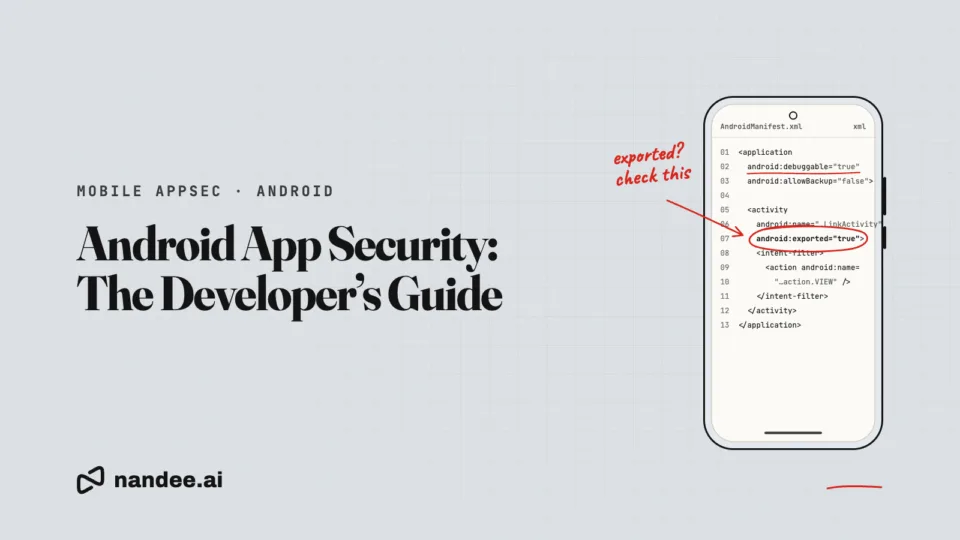
Reverse engineering and tampering are threats unique to the mobile world. Because the app binary lives on the user’s device, attackers can decompile it, analyze its logic, extract hardcoded secrets, patch it to remove security checks, and redistribute modified versions through unofficial channels.
Insufficient cryptography includes using outdated algorithms like MD5 or SHA-1, improper key management, hardcoded encryption keys in source code, or custom cryptographic implementations that fail basic scrutiny.
Code injection and runtime attacks, including hooking frameworks like Frida and Xposed, allow attackers to manipulate app behavior in real time, bypassing security controls that exist only at the code level.
Third-party SDK vulnerabilities introduce risk that app developers may not even be aware of. A compromised analytics or advertising SDK can leak data or serve as a backdoor into otherwise secure apps.
Core Pillars of Mobile Application Security
Effective mobile security rests on several interconnected pillars that together create defense in depth.
Secure Coding Practices
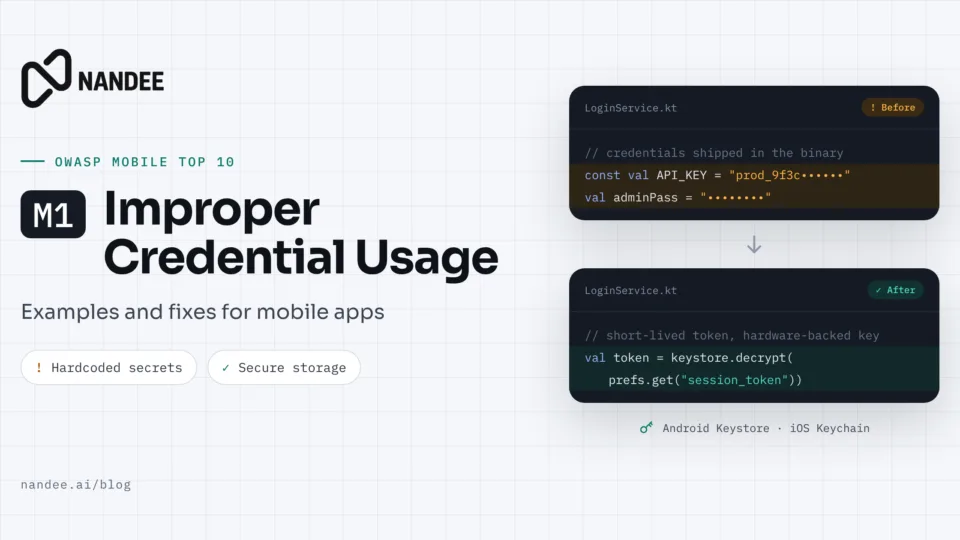
Security starts with the code itself. Developers should follow secure coding guidelines specific to their platform, whether that’s Android, iOS, React Native, or Flutter. This includes input validation, proper error handling that doesn’t leak sensitive information, avoiding hardcoded credentials, and using platform-provided security APIs correctly.
Data Protection at Rest and in Transit
All sensitive data should be encrypted using strong, industry-standard algorithms such as AES-256 for symmetric encryption and RSA-2048 or higher for asymmetric needs. On Android, leverage the Keystore system and EncryptedSharedPreferences. On iOS, use the Keychain and Data Protection APIs. For data in transit, enforce TLS 1.2 or higher and implement certificate pinning to prevent interception.
Strong Authentication and Session Management
Implement multi-factor authentication where appropriate, use secure session tokens with proper expiration, and validate all authentication server-side. Biometric authentication should be used as a convenience layer on top of strong cryptographic foundations, not as a replacement for them.
Runtime Application Self-Protection (RASP)
RASP technologies detect and respond to threats while the app is running. This includes identifying rooted or jailbroken devices, detecting debuggers and emulators, spotting hooking frameworks, and responding to tampering attempts. These protections are essential for high-value apps in finance, gaming, and enterprise sectors.
Code Obfuscation and Anti-Tampering
Obfuscation makes reverse engineering significantly harder by scrambling code structure, renaming classes and methods, and encrypting strings. Combined with integrity checks that verify the app hasn’t been modified, these techniques raise the cost of attack substantially.
API Security
Mobile apps are only as secure as the APIs they communicate with. Implement proper authentication using OAuth 2.0 or similar standards, rate limiting to prevent abuse, input validation on every endpoint, and careful API design that minimizes data exposure.
Mobile Application Security Testing
You can’t secure what you don’t test. A comprehensive mobile security testing strategy includes multiple complementary approaches.
Static Application Security Testing (SAST) analyzes source code or compiled binaries to identify vulnerabilities without executing the app. Tools in this category can catch issues like hardcoded secrets, insecure API usage, and known vulnerable dependencies early in the development lifecycle.
Dynamic Application Security Testing (DAST) examines the running application, testing how it behaves under various inputs and conditions. This reveals runtime issues that static analysis cannot detect, such as improper session handling or insecure network communication.
Interactive Application Security Testing (IAST) combines elements of both approaches, instrumenting the app to provide deeper insights during testing.
Penetration testing brings human expertise to the process. Skilled testers attempt to exploit the app the way a real attacker would, often uncovering complex vulnerabilities that automated tools miss.
Software Composition Analysis (SCA) focuses on third-party dependencies, identifying known vulnerabilities in the libraries and SDKs your app relies on.
Compliance and Regulatory Considerations
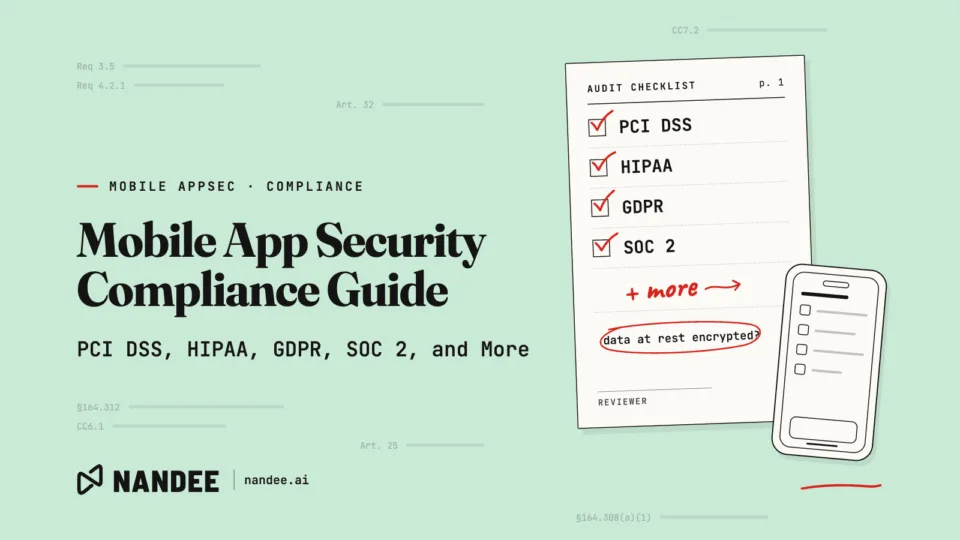
Depending on your app’s purpose and audience, you may need to comply with various regulations and standards. GDPR governs data protection for European users. HIPAA applies to health-related apps in the United States. PCI-DSS covers payment card processing. The DPDP Act regulates personal data in India. Industry frameworks like the OWASP Mobile Application Security Verification Standard (MASVS) and NIST guidelines provide technical benchmarks for security maturity. Building compliance into your security strategy from the start is far more efficient than retrofitting it later.
Best Practices for Building Secure Mobile Apps
Integrate security throughout your development lifecycle rather than treating it as a final checkpoint. Shift-left security practices catch issues when they’re cheapest to fix. Conduct regular security training for your development team so that secure coding becomes second nature. Maintain an inventory of all third-party dependencies and keep them updated. Implement comprehensive logging and monitoring to detect suspicious activity in production. Plan for incident response before you need it, because the middle of a breach is not the time to figure out your playbook. Finally, adopt a zero-trust mindset that assumes any component could be compromised and designs defenses accordingly.
The Future of Mobile Application Security
As mobile apps grow more sophisticated, so do the threats against them. Emerging challenges include AI-powered attacks that can automate reverse engineering and exploit discovery, increasingly sophisticated mobile malware targeting banking and crypto apps, supply chain attacks through compromised SDKs and build pipelines, and privacy-focused regulations that continue to raise the compliance bar. Forward-looking organizations are adopting AI-driven security tools that can match the pace of modern threats, implementing continuous security testing in CI/CD pipelines, and building security observability into their apps from day one.
Conclusion
Mobile application security is a continuous journey, not a destination. The threat landscape evolves constantly, and so must your defenses. By understanding the risks, implementing defense-in-depth strategies, testing rigorously, and staying informed about emerging threats, you can build mobile apps that users trust and attackers find too costly to compromise. Whether you’re developing a new app or strengthening an existing one, investing in mobile application security today protects your users, your business, and your reputation tomorrow. The best time to start building secure mobile apps was at the beginning of your project. The second best time is right now. Looking to strengthen your mobile application security posture? Nandee.ai helps teams identify vulnerabilities, enforce security best practices, and ship confident, compliant mobile apps. Explore how our solutions can protect what you’re building.